
 Written by
 Does HOP reduce injury rates?
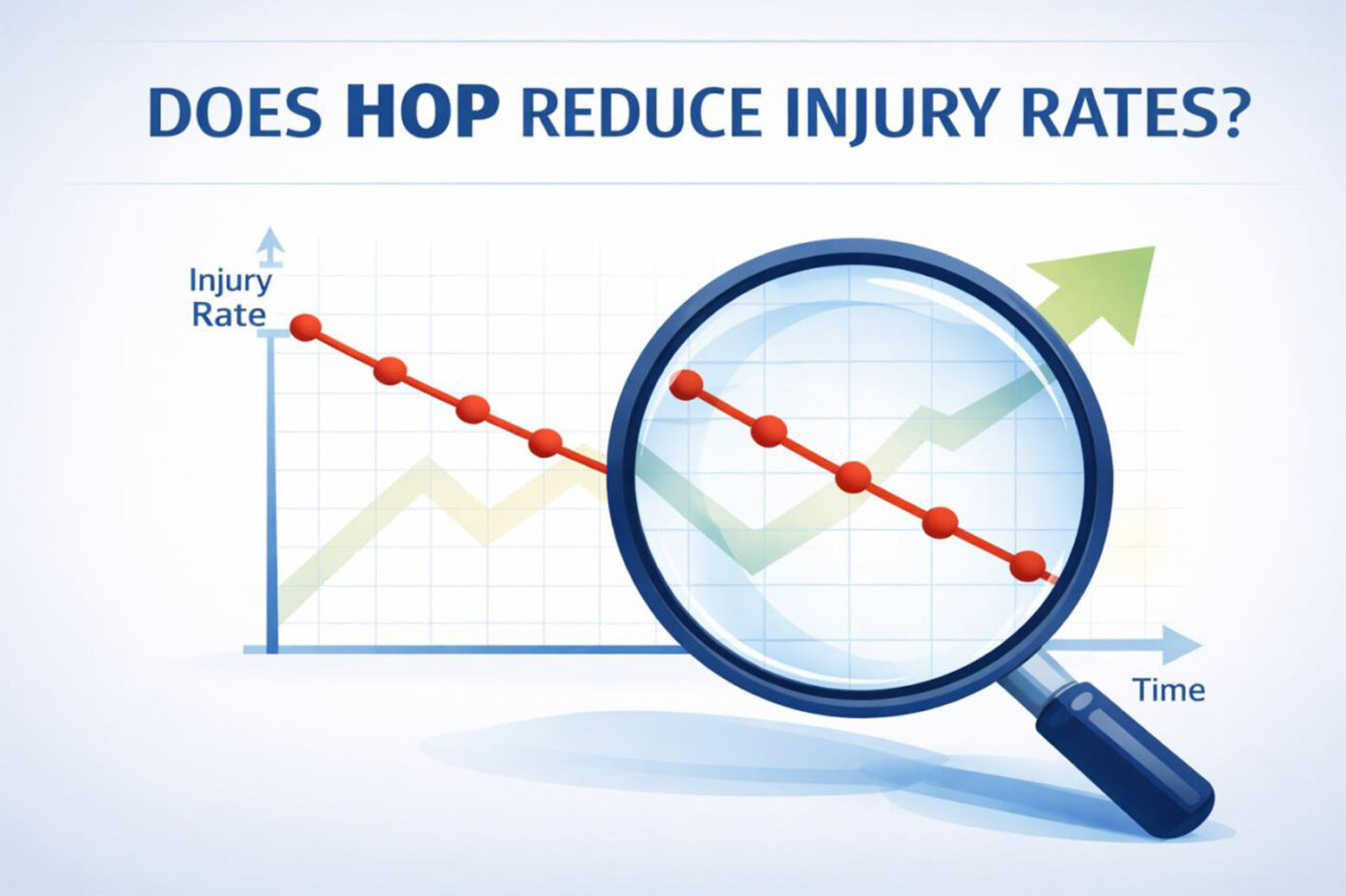
A recurring critique of Human & Organizational Performance (HOP) is that there is “insufficient evidence that it reduces injury rates”. The challenge is often framed in straightforward terms: if HOP works, where is the measurable decline in TRIFR, LTIFR, or recordable injury frequency?
At first glance, this appears to be a reasonable demand for empirical rigor. But the framing of the question reveals deeper misconceptions about how safety performance is theorized, measured and interpreted. Before asking whether HOP reduces injury rates, we must examine whether injury rates are the appropriate dependent variable for evaluating a cultural and systemic intervention.
The Outcome Metric Problem
Injury frequency is a lagging indicator of harm. It captures the manifestation of failure after controls have degraded or exposures have accumulated. As a metric, it is characterized by several structural limitations:
- It is a KPI for most companies, and therefore must be ‘driven down’
- It is vulnerable to under-reporting pressures, rendering it an unreliable metric
- It is a low base-rate event in many industrial settings, leading to statistical invalidity.
- It is highly sensitive to reporting thresholds and classification practices.
- It is influenced by medical management decisions.
- It can be distorted by workforce size fluctuations or operational variability.
Injury frequency does not directly measure system resilience or control integrity. It measures the end state of a complex chain of events, where in a low-injury rate environment, random fluctuations bedevil any rational conclusions.
When a framework such as HOP is introduced, it aims primarily to alter leadership behaviors, learning processes, reporting climates and system design practices. These are upstream variables. Expecting linear changes in downstream injury statistics reflects a misunderstanding of ‘causal distance’.
What HOP Intends to Change
HOP’s core commitments include:
- Viewing error as information rather than structural failure.
- Reducing blame as a default response.
- Encouraging reporting of weak signals and near misses.
- Exploring systemic contributors to performance variability.
- Strengthening learning loops.
These shifts alter how organizations process information about risk.If implemented with fidelity, HOP should increase the visibility of operational realities. Workers may report more near misses. Minor injuries may be classified more accurately. Control weaknesses may be surfaced earlier. Production pressures and trade-offs may be discussed more candidly.
In such circumstances, reported incident rates may initially rise. There is wide-spread evidence of that, and is not evidence of deterioration, its evidence of increased transparency.
The Reporting Paradox
There is a well-documented phenomenon across high-reliability sectors: higher reporting density often correlates with safer long-term performances. Aviation and healthcare reporting systems illustrate this clearly. Organizations with robust, non-punitive reporting cultures tend to generate larger volumes of safety data and reporting rates. They are not less safe; they are more active in challenging themselves.
Moreover, low injury numbers can coexist with high latent risk in low-trust environments, and there is abundant evidence of that to be found, in highly publicized industrial disasters.
If HOP reduces fear and increases voice, an early phase characterized by elevated reported incidents should not be surprising. In fact, in environments where such data has been driven down, such as been happening in many organizations with BBS programs, it is ideal that injury rates (reporting) should go up!
The critical analytical question is not whether injury numbers temporarily increase, but whether the organization’s capacity to detect and correct risk improves.
Does Evidence Exist?
Critics often argue that there are no randomized controlled trials demonstrating that “HOP reduces injuries.” It is true that such experimental designs are rare in complex socio-technical systems. Organizations cannot easily be assigned to controlled conditions with isolation of cultural variables over multi-year periods. It is a fallacy to think that it should. Even in BBS, with its false premise that injury rates is a proxy for safety, such designs are rare.
However, while direct experimental evidence may be limited, the underlying mechanisms of HOP are strongly supported by adjoining research domains:
- Psychological safety research demonstrates that teams with higher interpersonal trust report more errors and learn more effectively.
- Safety climate meta-analyses link leadership commitment and reporting openness to injury outcomes over time.
- High Reliability Organization (HRO) research shows that preoccupation with failure and reluctance to simplify interpretations correlate with improved risk management.
- Just culture studies illustrate how blame reduction improves reporting and learning behaviors.
- Organizational learning theory consistently connects feedback richness to adaptive performance.
The causal chain implied by HOP is indirect but coherent:
- Leadership climate influences reporting behavior.
- Reporting behavior influences risk discovery.
- Risk discovery enables control correction.
- Control correction influences exposure to serious harm.
- HOP intervenes primarily in the early stages of this chain.
The absence of short-term injury reduction does not negate the validity of HOP; it indicates that measurement horizons may be misaligned with intervention targets. The link between ‘HOP’ and ‘injury rates’ is simply impossible to make – even though most BBS pundits hate to hear that. Injury frequency, especially serious injury or fatality events, are too infrequent to register statistically significant shifts within short observation windows.
This raises an important methodological issue: when evaluating systemic interventions, we must consider leading indicators of system integrity, not solely lagging indicators of harm.
Examples of such measures include:
- Risk discovery and reduction rates.
- Frequency of identified control failures.
- Ratio of hideable vs non-hideable risk reporting.
- Time-to-correction metrics.
- Ratio of behavioral vs systemic risk observations.
- Ratio of critical control failures of p-Fatality (high-impact) vs p-Injury (low-impact) risks.
If these indicators improve under HOP implementation, then the organization’s exposure profile may be declining, even if injury statistics fluctuate.
It is (or it should be) well-known that an over-reliance on injury frequency as the primary proof of effectiveness can create perverse incentives. When leaders are evaluated predominantly on low injury numbers, pressures typically arise to minimize recordability, reinterpret classifications, or discourage reporting. In this context, demanding that HOP demonstrate immediate injury reduction illustrates an inability (or unwillingness) of the challengers to move the beyond the myopia of metrics.
Does HOP Increase Injuries?
It is sometimes asserted that HOP “increases injuries” because reported rates rise following implementation. This interpretation confuses recorded events with actual harm prevalence.
If under-reporting was previously present, improved transparency will elevate recorded numbers. This is not an increase in harm occurrence; it is an increase in harm detection.
Over time, if control quality improves and exposure is reduced, serious injury potential should decline. However, this effect may be gradual and masked by reporting dynamics. Many organizations that claim to apply the HOP framework still maintain ‘old view’ metrics and governance that drives the opposite intention of HOP.
Why do Serious Injury and fatality rates remain stubbornly high?
It is often asserted that SIF rates are not reducing, plateauing or even increasing. There is no universal truth to the claims. In the USA, fatality rates are declining, in Canada not, Europe generally stable and Australia declining. In some sectors yes, in others no, and a blanket blame of HOP is shortsighted and myopic. If a company claims its ‘following HOP principles’ on the website, it is a far cry from effectively deploying them.
The lack of impact does not lie within the scope or intent of HOP, it lies within entrenched KPI’s and governance in the organization, that continue to drive a focus on “safe outcomes” – a term that even pundits of HOP can’t escape and fail to see its degenerative impact on systems and culture.
Reframing the Debate
The debate about HOP and injury reduction often reveals a deeper tension within the safety profession. One paradigm equates safety with the absence of recorded harm. The other conceptualizes safety as the presence of adaptive capacity.
If safety is defined purely as low injury frequency, then any intervention must demonstrate numerical decline to be validated. If safety is defined as the ability to anticipate, monitor, respond and learn, then measurement must expand beyond outcome counts. HOP aligns more closely with the broader framing of what ‘safe’ is.
A More Appropriate Question
Instead of asking whether HOP reduces injury rates in the short term, a more meaningful inquiry is:
- Does HOP increase the organization’s ability to see risk before harm occurs?
- Does it accelerate the identification and correction of control weaknesses?
- Does it strengthen systemic learning?
- Does it reduce the over-reliance on blame as a regulatory mechanism?
- Over extended and valid timeframes, does serious injury exposure decrease as control quality improves?
Conclusion
The demand for evidence that HOP reduces injury rates is understandable. Evidence matters. However, evidence must be sought in alignment with the theory of change being evaluated.
HOP intervenes in leadership behavior, reporting climate, and learning architecture. Its first-order effect is increased transparency. Its second-order effect is improved control integrity. Only at a third-order level should we expect measurable shifts in serious harm outcomes. And for the third-order level, the onus is on the safety profession to develop and deploy the methods, techniques and tools to do that.
And again, yes…the HOP principles are not ‘new’ as in ‘it never existed before and we invented a new wheel”. HOP never claimed that. It evolved from the 1980’s and 90’ from the work of Perrow, Rasmussen, Reason, later Woods, Hollnagel, Dekker, and more prominently, Todd Conklin and the Department of Energy. Edward Deming’s 14 principles in the 1980’s are very closely aligned with HOP principles.
Maybe the lack of earlier traction was because it was stalled and stymied by the ‘success’ of BBS, which offered simpler and simplistic tools and slogans. BBS was successful, but we must ask, successful with what? An easy recipe that appealed more to operational managers need for short term impact and ‘evidence’, that can be captured in a triangle and an ABC acronym? Yes, BBS has those in abundance and showed measurable “success” in driven-down metrics, or with the help of the “Halo Effect”, at best.
The more substantive challenge for the safety profession is not whether HOP reduces injury rates, but whether our measurement frameworks are sophisticated enough to detect meaningful system improvement when it occurs. That is a deliberation worth having – and it extends well beyond HOP itself.
Neil de Grasse tells interesting analogy, also applicable to safety, of the measurement of the fish population (injuries) in the ocean with a bucket, dipped into the water…even millions of buckets over a million years will still fail to measure the incidence of sharks, whales and orcas (SIF’s). The rarity of SIF’s makes it non-measurable and invalid, and the illusion of ‘near misses’ as an indicator dangerously invalid. Forget about measuring the potential SIF’s and system dynamics with “outcome” metrics.
As it stands now, yes, HOP doesn’t have many of these practical levers in its arsenal, yet. It’s just a reality that, as paradigms and frameworks evolve, like they are now, many of the old tools and techniques are and will become obsolete. The energy should not go to how we can hang on to them, but how we can evolve them too. And so too, how we measure our success or failure.
BBS had an 80-year run, during which methods ad measurements solidified. That era has been superseded by the evolution of ‘new thinking’ in the past 10-15 years, and still evolving. BBS pundits have a choice…remain knee-deep in the horse manure because you can’t stand these new horseless carriages, or adopt, adapt and contribute to the growth of the safety profession.
Some thought leaders of BBS have led that way, like Tom Krause has done, but it seems that many of the followers remain unwilling.
(Full disclosure: Trained as a behavioral psychologist in South Africa, my original focus in safety in the 1980’s in the South African mining, was based on behavioral safety, and with BBS interventions, reached several SIF improvements milestones with a large organization – 60 mines and 120 000 employees – using behavioral reward and observation systems. The improvements were fragile and fluctuating, and in hindsight, it was also the impact of the Halo effect.
In 1990’s and 2000’s, I deployed a “HOP-like” transformation process for a company, based on Deming’s Principles, and reached sustained targets of SIF improvements, in a gold mining company with 5000 employees. The mine has never achieved a Million Fatality Free (MFF) target in its history, and proceeded to achieve this goal several times, and eventually the 5 Million Target, which in the treacherous ultra-deep underground gold mining, is a remarkable achievement).